
Home > Pain Relief > Sciatica
›
The real reason your debilitating condition keeps coming back — no matter how you manage it: Expert reveals what's happening inside the disc that most sufferers are never told about
Spinal surgeon who has performed 658 back surgeries reveals the real reason surgery, injections, and painkillers all fail. And the one thing that actually addresses what has been keeping your nerve on fire.
★★★★★ 4.9 out of 5 · Based on 20,000 verified reviews


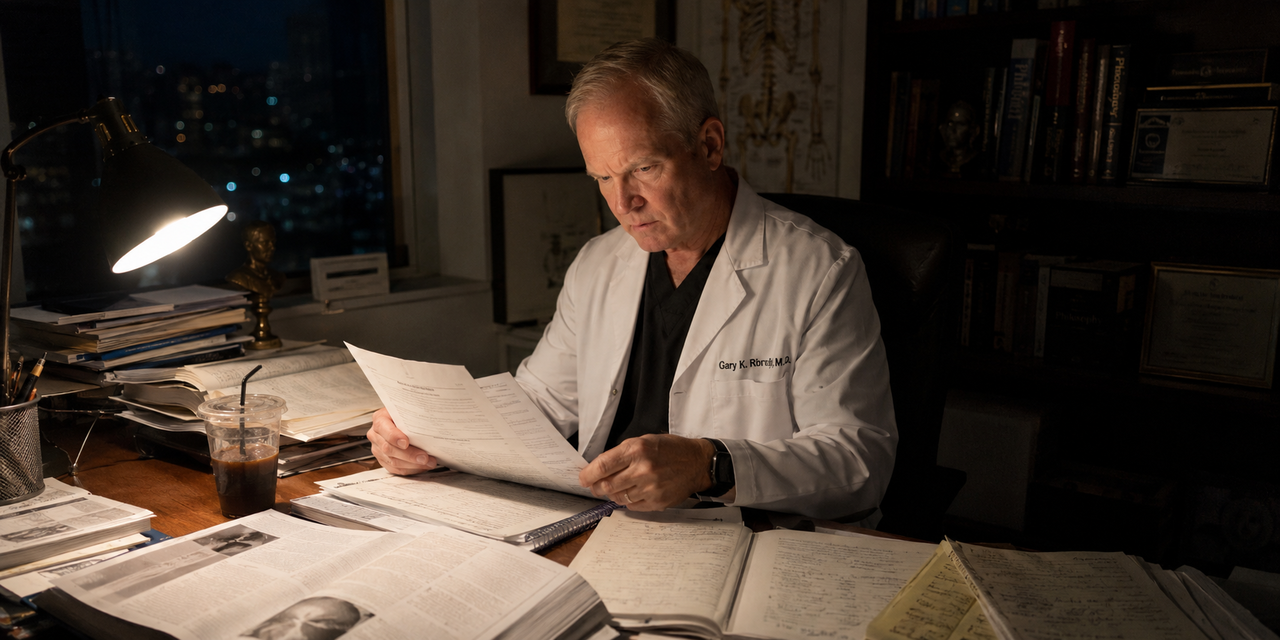
Dr. James Hargreaves, FRCS
Consultant Spinal Surgeon · 36 Years Clinical Practice · London
10:15 am BST
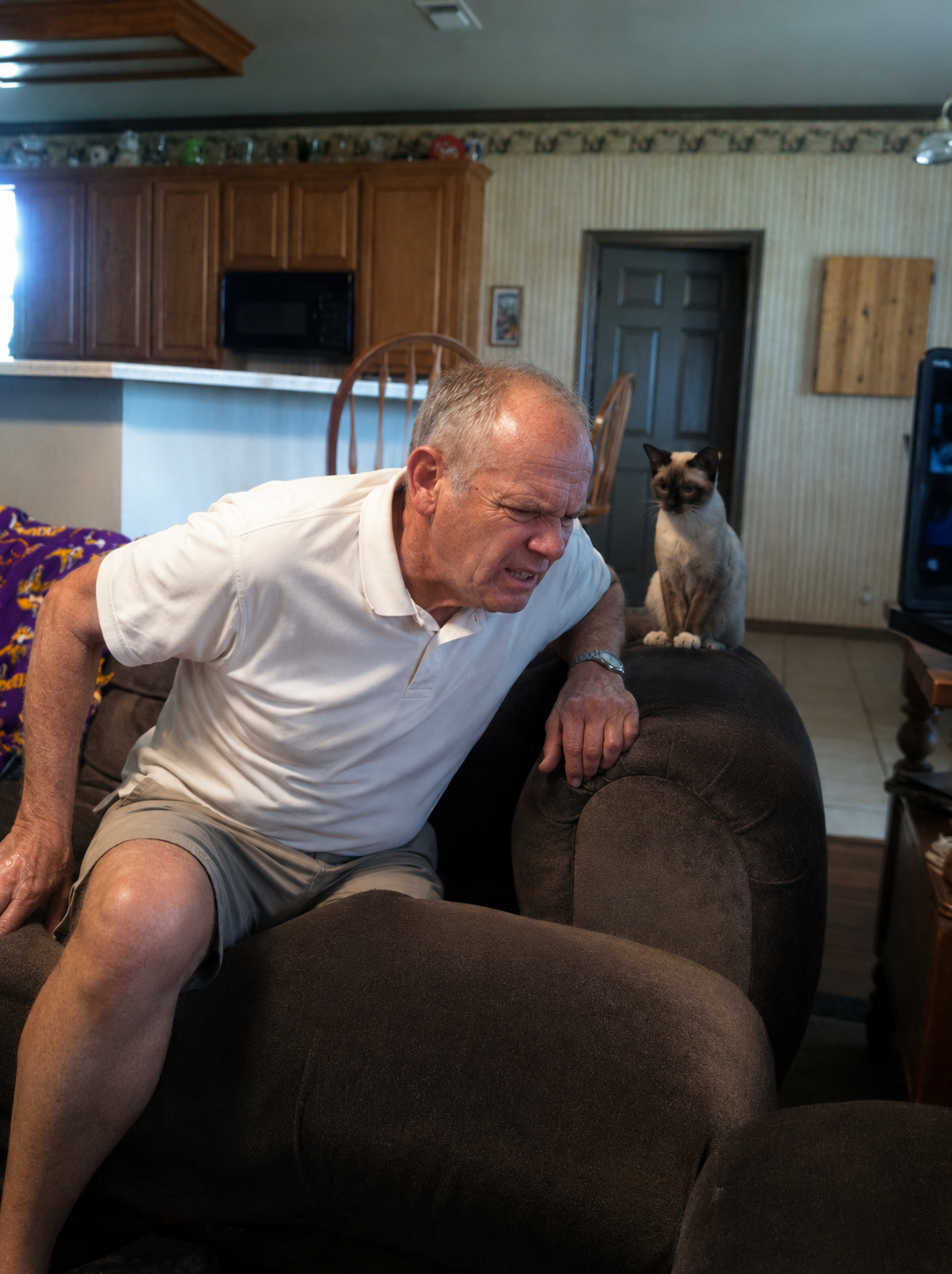
The morning David Pearce realised something was seriously wrong, he was sitting on the edge of his bed trying to put his socks on.
The 63-year-old retired electrician from Leeds had spent 35 years climbing ladders, pulling cable through walls, fixing things other people couldn't figure out. He was the one people called. Neighbours, family, it didn't matter. Something needed doing, Dave sorted it.
That morning, putting on his socks took eleven minutes.
"It didn't happen all at once," he says. "A twinge here, a bad morning there. Then one day the pain running from my lower back down through my left leg was so bad I couldn't get my trousers on without sitting on the edge of the bed and doing it one inch at a time."
What followed was a slow dismantling of everything that had defined him. His grandson Jack, four years old, at the age where he wants to be picked up and wrestled and climbed on — and Dave flinching every time he came running.
"That's not something a grandfather should ever feel," he says quietly. "Being scared of your own grandchild running at you."
At night it was worse. Every evening he'd lie down and wait for it. And it always came. Somewhere around 1:30 in the morning, the burning would start — lower back first, then down through the left leg like an electric current. Sharp enough to pull him out of whatever shallow sleep he'd managed.
He started sleeping with a pillow between his legs because someone online said it helped with spinal alignment. It did, slightly. But he was still waking up. Every night. Same time. Same pain.
"I can't feel my right foot properly anymore," he says. "It saddens me. I can't do what I could years ago. All this pain, and nobody seems to understand what it actually feels like to live inside it."
David is not alone. Sciatica affects around three million Britons each year, and for sufferers like David — men in their sixties who have spent decades in physical work — the condition doesn't just cause pain. It quietly dismantles identity.
"I've had problems with my back for over 20 years," he says. "But nothing like this. The worst pain I've ever endured in my life has come from this. Both sides, back to toe, numbness. You lie there at half one in the morning and you think — is this it? Is this just what my life looks like now?"
What the NHS Offers — And Why It Keeps Falling Short

For most sciatica sufferers, the journey through the NHS follows a familiar and demoralising pattern.
David's first stop was his GP, who referred him to physiotherapy. He waited eleven weeks for his first appointment.
"When I finally got seen, they handed me a printed sheet of exercises and told me to come back in six weeks. That was it."
He did every exercise on that sheet. Twice a day, for two months. The pain eased slightly while he was doing them, then returned the moment he stopped.
Meanwhile, the prescriptions began. First standard painkillers, then stronger ones.
"All the doctors I spoke to had no clue how painful sciatica actually is," he says. "They dish out painkillers that can't even take the edge off the pain, and expect you to wait a year for a scan or a specialist appointment. It's an eye opener to how little they actually know about the condition they're treating."
When the painkillers failed, his GP moved him onto Gabapentin — a drug for nerve-related pain that sits further up the NHS treatment ladder.
David took it for months.
"I suddenly started stuttering and getting jerky limbs," he says. "It was incredibly embarrassing. I read up on Gabapentin and the long-term effects shocked me. I stopped them immediately. The side effects of that medication were honestly scary."
He wasn't alone in that experience. NHS guidelines recommend Gabapentin and its equivalent Pregabalin as standard treatment for persistent nerve pain — but a growing number of patients are reporting severe neurological side effects from long-term use, and many are discontinuing the medication only to find the pain returns immediately.
For David, the next step was a steroid injection into the spine. It worked — for three weeks. Then the pain came back, slightly worse than before.
"They said they could do another one. But we can only do so many before the effects wear off, they told me. So that door was closing too."
What followed was eighteen months in the referral loop. Another MRI. Another letter.
Another appointment six weeks away.
Another specialist who looked at the scan, nodded slowly, and said they'd monitor the situation.
"Eighteen months of being investigated," David says. "Not one person actually treating the thing."
The only remaining option, he was told, was surgery.
He'd watched his brother go through back surgery in his fifties — the recovery was the hardest thing he'd ever done, and the nerve pain still came back on bad days.
"If your pain doesn't come back after spinal surgery, you are one of the lucky ones," David says. "I wasn't ready to risk that. Not with the time I have left."
Dr. Whitfield: "The disc doesn't just press on the nerve. It leaks."


Dr. Sarah Whitfield is a consultant in pain medicine at University College London, specialising in spinal nerve conditions. She has spent fifteen years studying why sciatica keeps returning in patients who have done everything they were told to do.
She is not surprised by David's experience.
"The overwhelming majority of treatments available for sciatica — physiotherapy, painkillers, steroid injections, even surgery — are all aimed at the same thing," she says. "Relieving the mechanical pressure on the nerve. Decompressing it. And that's not wrong. But it's incomplete. And that's why the pain keeps coming back."
The problem, she explains, begins with the structure of the disc itself.
"Most patients are told their disc has herniated and is pressing on the sciatic nerve. That's true. But what they're not told is what else happens when a disc herniates."
The disc, she explains, is structured much like a jam doughnut. A tough outer casing surrounding a soft gel centre. When it herniates, that gel doesn't simply press outward.
It leaks.
"The gel spills directly onto the sciatic nerve," says Dr. Whitfield. "And that gel is loaded with inflammatory chemicals. When those chemicals make contact with the nerve, it becomes hypersensitive. It begins firing constantly — not because it's being compressed, but because it's been chemically irritated."
She uses a simple analogy to explain the sensation.
"Think of lemon juice on an open cut. The nerve isn't being damaged. It's being relentlessly aggravated. And it responds the only way it knows how — by sending pain signals, continuously, day and night."
This, she says, is the mechanism that standard treatments entirely miss.
"The physio exercises decompress the spine. The steroid injection reduces local inflammation temporarily. The surgery removes the herniated material. All of that addresses the pressure. None of it touches the chemical environment the nerve is sitting in."
And here is what she describes as the cruelest part.
"The disc begins to heal on its own. The MRI starts to look better. The pressure does come off. And then the pain comes back anyway. Because the inflammatory chemicals are still there, still soaking the nerve. The nerve has been sitting in that chemical environment for so long that it has been rewired. It now fires on its own. The disc is no longer the problem. The nerve is stuck."
She pauses.
"This is what most patients are never told. And it's why they spend years in a cycle of temporary relief followed by the pain returning. Every single time."
The Compound That Clears the Chemical Environment

Dr. Whitfield describes one patient whose case she uses to illustrate the mechanism clearly.
Brian, 71, a retired firefighter from Manchester, had suffered with sciatica for nearly four years. He had been through the same treatment ladder as David — physiotherapy, injections, the referral loop. The pain always returned.
"Brian came to me after his second steroid injection wore off," she says. "Classic presentation. The nerve was stuck in a sensitised state. The disc was largely healed. But the chemical environment hadn't been addressed."
The compound she recommended was curcumin — the active molecule found in turmeric, with a body of clinical research supporting its ability to neutralise the specific inflammatory chemicals that accumulate around sensitised spinal nerves.
"Curcumin works differently from anything else we use for sciatica," she explains. "It doesn't mask the pain signal. It goes directly to the inflammatory chemicals at the nerve and clears them. It removes the reason the nerve is firing in the first place."
There was, however, a significant problem.
"The enzymes in the gut destroy curcumin before it reaches the bloodstream," she says. "This is why people try turmeric from the supermarket and feel nothing. It never arrives at the nerve. It's not that curcumin doesn't work. It's that standard turmeric can't deliver it."
The solution came in the form of BioPerine — a patented black pepper extract that blocks the gut enzymes responsible for destroying curcumin before absorption.
"Clinical trials show that combining curcumin with BioPerine increases absorption by up to 2,000 percent," says Dr. Whitfield. "Same compound. Except now it actually survives the journey and reaches the nerve."
Brian began taking a pharmaceutical-grade turmeric supplement containing patented BioPerine, manufactured to GMP-certified standards with independent batch testing on every production run.
Four months later, Dr. Whitfield saw him for a follow-up.
"He walked into the room normally," she says. "Not carefully. Not with that measured, calculated movement I recognised from every previous appointment. He just walked in."
Brian's own account is simpler.
"I'm back in my garden," he says. "Pruning my roses. Doing the things I used to do. I don't think about my back when I'm out there anymore. That's the difference."
David Tried It For Himself. Here's What Happened.
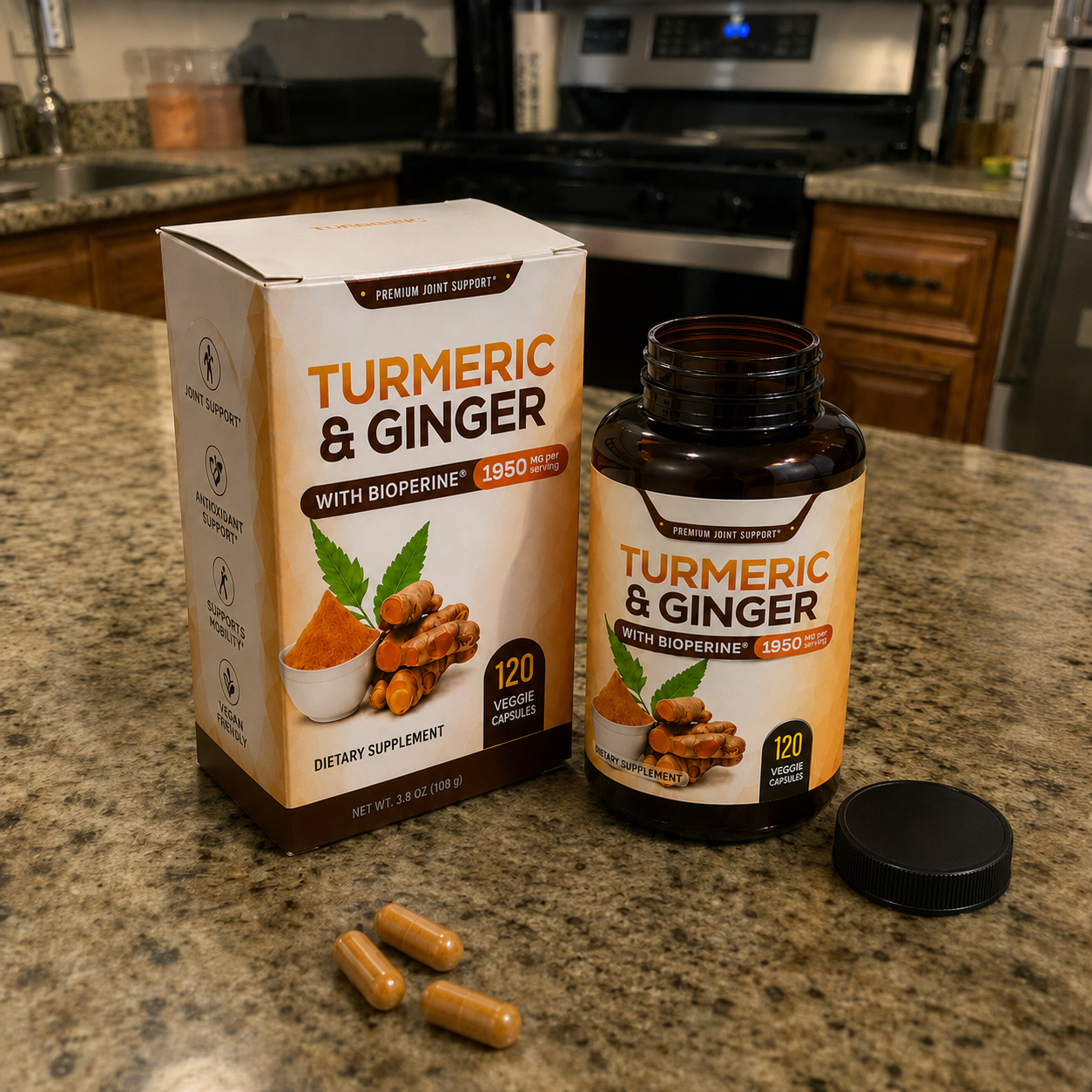
After reading Dr. Whitfield's findings, David ordered a bottle of the turmeric supplement she recommended.
"I won't pretend I was confident," he says, "I'd been disappointed too many times. But I was out of roads."
Week 1
Nothing dramatic. The shooting pain that had woken him at 1:30 every morning seemed slightly less sharp on two of the seven nights. He didn't read into it.
He kept taking them.
Week 2
He slept through until quarter past three. Woke for the bathroom, went back to sleep. In eight months that hadn't happened once.
He mentioned it to his wife Margaret.
"She said keep going," he recalls. "That was enough."
Week 4
He was in the garden. Walking round, looking at what needed doing. He'd been out there for twenty minutes before he realised he hadn't thought about his back once.
Not managing it. Not calculating his movements.
He planted the roses he'd been looking at from the window for six months.
Month 2
He slept through the night.
Not woke at half one and managed to get back to sleep. Slept through. Woke at ten past eight when the neighbour's dog started barking, and lay there for a moment not understanding why everything felt different.
Then he realised. Nothing had woken him. The pillow was still between his legs out of habit. It hadn't been needed.
Margaret noticed he was quieter than usual over breakfast. She asked if he was alright.
"I told her I'd just had the best night's sleep I'd had in two years," he says.
She put her hand on his arm and didn't say anything. She didn't need to.
Month 3
David played nine holes of golf last Tuesday. He hadn't played in two years. He didn't tell anyone he was going because he didn't know how he'd feel when he got there.
He played all nine.
"My swing is nowhere near what it was," he says. "But I was there. Actually present. Not thinking about whether I'd make it to the next hole."
His grandson Jack came to visit the following weekend. He came running across the garden the way four-year-olds do, arms up.
David picked him up.
"I didn't brace for it," he says. "I just picked him up. He had no idea what that meant. He's four. He just wanted to be held."
What to Do If You Recognise This

Right now, you are at a crossroads.
Path 1 — Keep doing what you're doing
Keep taking the painkillers that can't take the edge off and waiting a year for the scan that changes nothing.
Keep doing the exercises on the printed sheet and wondering why the pain comes back the moment you stop.
Keep trying the injections that work for three weeks, then stop, then leave you exactly where you started.
Keep lying awake at 1:30 in the morning waiting for the burning to pass.
Keep sitting out the grandchildren on the floor, the garden, the golf, the things that used to make you feel like yourself.
Keep being the one who used to fix everything, quietly becoming the one who needs help with things he never needed help with before.
Keep funding a system that calls this managing, and sends you home with another appointment in six weeks.
Path 2 — Address what's actually keeping your nerve on fire
Give your body the only compound clinically shown to reach the inflammatory chemicals at the nerve. Not mask the signal. Clear the source.
Week 1: wake up and notice the 1:30 pain didn't come last night.
Week 2: sleep through until morning. Something that hasn't happened in months.
Week 4: plant the roses you've been looking at from the window.
Month 2: sleep through the night in your own bed. Wake up when you choose to. Put your hand on your wife's arm and not need to say anything.
Month 3: pick up your grandson without bracing for it. Be there for nine holes. Actually be present.
One morning, realise you forgot you had sciatica yesterday. The whole day.
What Others Have Found
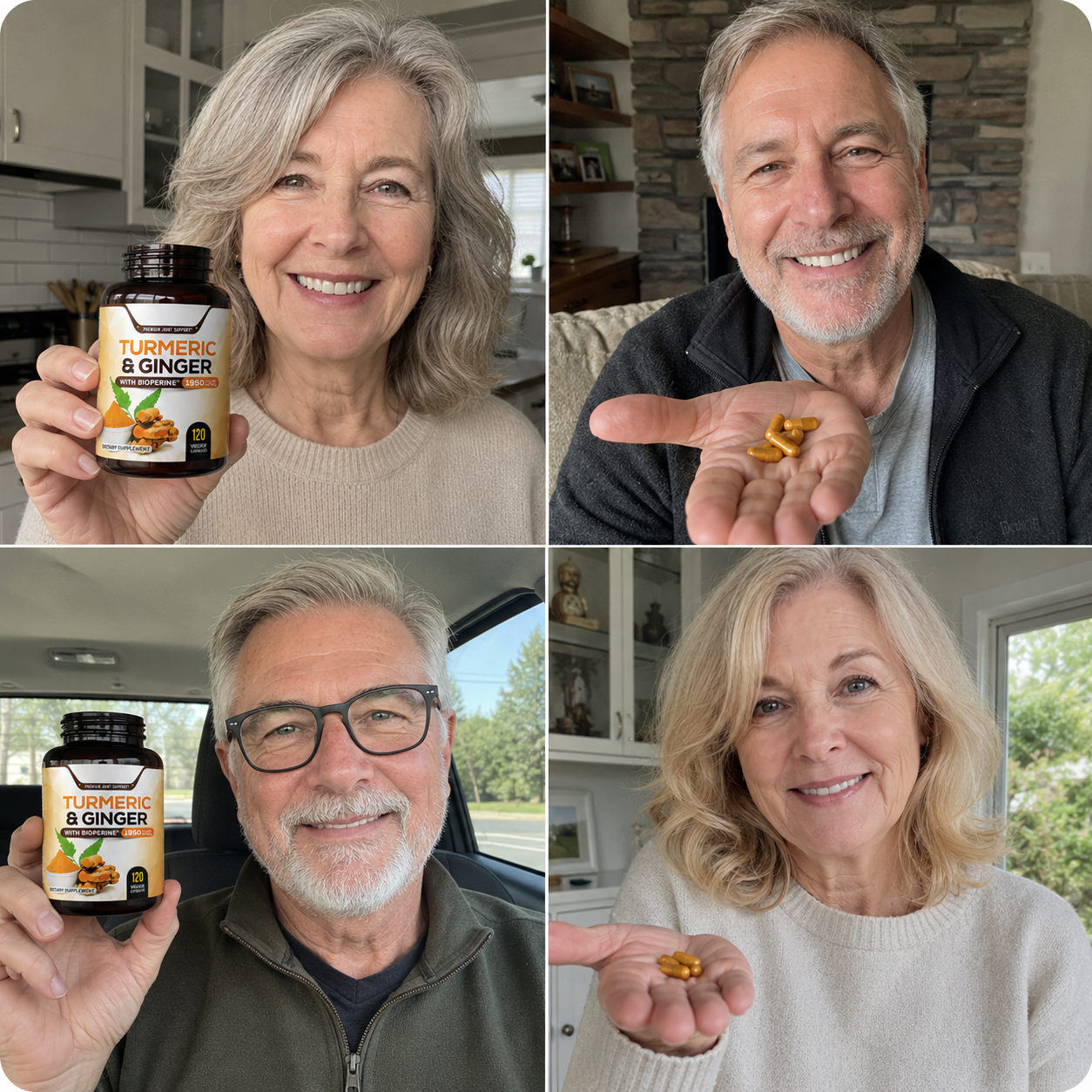
100.000+
Reviews From Squatchers
The choice seems obvious. You've been burned before. Spent money on treatments that promised everything and delivered nothing. Had your hope built up and knocked back so many times you've stopped letting yourself believe it's fixable.
The research has known about this mechanism for years. The problem was never the disc. The disc heals on its own. The problem is what it leaves behind — and the fact that nothing in the standard treatment pathway is designed to address it.
Aurelia Turmeric with BioPerine. GMP-certified. Independently batch tested. Patented BioPerine for up to 2,000% increased curcumin absorption. Two capsules in the morning.
If you're not satisfied within 30 days, full refund. No forms. No calls. No argument.